
Stellantis FaSTLAne 2030: The €60 Billion Automotive Turnaround Blueprint
5 months ago 2026-05-21 14:57Stellantis FaSTLAne 2030: The €60 Billion Automotive Turnaround Blueprint
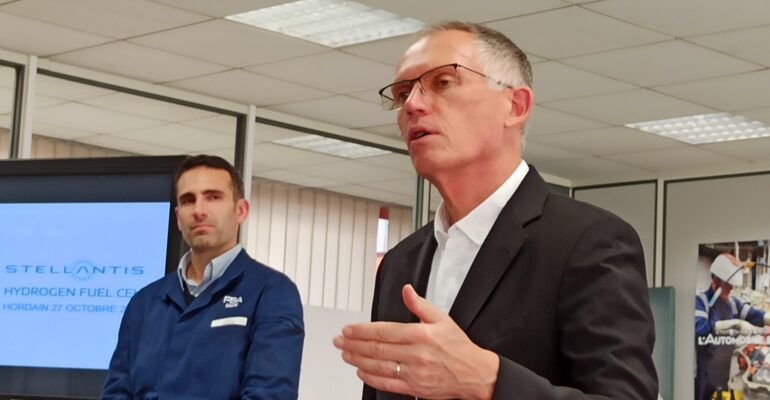
The global automotive sector has officially entered its most cutthroat, data-driven era of realignment. On Thursday, May 21, 2026, during a highly anticipated Investor Day at the company’s North American headquarters in Auburn Hills, Michigan, Stellantis shook the industry by unveiling its massive new turnaround framework: Stellantis FaSTLAne 2030.
Led by CEO Antonio Filosa, this radical €60 billion ($69.6 billion), five-year strategic roadmap shifts the company away from sprawling brand independence toward strict capital discipline, asset reuse, and platform consolidation. It is a high-velocity response to declining market share, bloated pandemic-era inventories, and intensifying competition from cost-efficient Chinese manufacturers.
For automotive executives, retail investors, and digital media networks keeping track of global industry trends, the Stellantis FaSTLAne 2030 framework serves as the definitive 2026 blueprint for navigating a highly volatile manufacturing landscape.
1. What is the Stellantis FaSTLAne 2030 Strategic Plan?
At its core, Stellantis FaSTLAne 2030 is a multi-layered discipline shift designed to maximize capital efficiency and squeeze out robust profit margins while completely halting internal brand cannibalization.
The Six Pillars of Transformation
Presented during the strategic morning session of the 2026 Investor Day, Filosa outlined six core structural pillars anchoring the company’s future:
- Sharper Brand Portfolio Management: Overhauling how the company’s 14 iconic brands are funded and grouped.
- Global Platform and Tech Investment: Funneling €24 billion ($27.8 billion)—40% of the entire budget—into localized powertrains and next-gen software architectures.
- Strategic Partnerships: Complementing core manufacturing strengths with outside tech powerhouses.
- Manufacturing Footprint Optimization: Enhancing capacity utilization while scaling back bloated legacy operations.
- Excellence in Execution: Streamlining vehicle delivery timelines and decreasing go-to-market costs.
- Empowerment of Regions: Giving local teams the autonomy to adapt vehicles to localized market realities.
The Massive Product and Refreshes Blitz
Rather than a reckless, wholesale gamble on pure electrification, the Stellantis FaSTLAne 2030 roadmap employs a pragmatic multi-energy hedge. Stellantis will launch 60-plus new vehicles and initiate 50 major refreshes by 2030 across a carefully calculated powertrain mix:
| Powertrain Type | Number of Planned Launches by 2030 | Strategy Focus |
| Battery-Electric Vehicles (BEVs) | 29 Models | Zero-emissions compliance & urban tech |
| Hybrid Electric Vehicles (HEVs) | 24 Models | Affordable fuel efficiency for mass markets |
| Plug-in / Range-Extended Hybrids (PHEV/REEV) | 15 Models | Range anxiety mitigation for regional buyers |
| Traditional ICE & Mild-Hybrids | 39 Models | Sustained profitability in combustion strongholds |
2. Realignment of the Portfolio: Which Automotive Brands Win and Lose?
The most jarring aspect of the Stellantis FaSTLAne 2030 announcement is the corporate retrenchment of its brand lineup. Stellantis is officially abandoning the costly illusion that all 14 of its subsidiaries can coexist as independent global powerhouses.
The “Global Core” Big Four
Stellantis is focusing 70% of its total product and brand investment onto just four global heavyweights judged to have the highest baseline scale and margin potential: Jeep, Ram, Peugeot, and FIAT, alongside the highly profitable Pro One commercial vehicle division. These core marques will serve as the natural “first launchers” for all cutting-edge global assets.
Regional Demotions and Badge Engineering Shuffles
Under the strict capital allocation rules of Stellantis FaSTLAne 2030, several legendary nameplates have lost their global crowns and been designated as regional or specialty sub-marques to save cash:
- The Regional Tier: Alfa Romeo, once aggressively marketed to rival BMW worldwide, has been downgraded to a regional brand alongside Chrysler, Dodge, Citroën, and Opel. They will focus strictly on historical stronghold markets using shared, reskinned architectures.
- The Sub-Brand Absorptions: In an effort to eliminate duplicate administrative overhead, the premium DS Automobiles brand is being swallowed back by Citroën. Concurrently, Lancia loses its independent corporate identity and is placed directly under FIAT management as a boutique, specialty marque.
- The Luxury Reset: Maserati stands alone in the luxury tier, protected from the badge-engineering shuffle but scheduled for a massive performance and luxury reset with a detailed product roadmap arriving in December 2026.
3. Advanced Platforms and Hardware: Introducing STLA One and Software 2027
To make the economics of Stellantis FaSTLAne 2030 work, the automaker is relying heavily on radical component reusability. The goal is to have 50% of global annual volumes ride on just three global platforms by 2030.
The Debut of the STLA One Architecture
The crown jewel of this consolidation is the all-new STLA One modular architecture. This ultra-flexible, intelligent platform is engineered to support multiple vehicle sizes and seamlessly house ICE, hybrid, and fully electric powertrains on the exact same assembly lines. By standardizing under-the-skin engineering, Stellantis aims to unlock a staggering €6 billion in annual cost savings by 2028.
Software and Big Tech Ecosystem Partnerships
A pivotal element of the 2026 Investor Day presentation was the expanded tech web designed to elevate the “Sensory Utility” of next-gen vehicles.
- Qualcomm & Snapdragon Chassis: Stellantis is deepening its integration with Qualcomm to deploy the Snapdragon Digital Chassis across all future vehicle cockpits, handling advanced driver assistance (ADAS) and local infotainment connectivity.
- Wayve Autonomous Tech: A fresh partnership with AI developer Wayve was confirmed, aiming to bring hands-free, door-to-door supervised automated driving to mass-market consumer vehicles at scale.
Conclusion: The Ultimate Test of Capital Discipline
The Stellantis FaSTLAne 2030 plan is a fierce acknowledgement of a changing global market. By centering its engineering on the flexible STLA One platform, trimming regional global ambitions, and backing a realistic multi-energy powertrain mix, CEO Antonio Filosa is attempting to construct a highly resilient automotive ecosystem. Ultimately, the success of this €60 billion turnaround will not be measured by corporate promises, but by the raw execution of its streamlined footprint in an unforgiving, hyper-competitive global landscape.