
CubeSat Kit Cost
6 months ago 2026-04-20 11:23CubeSat Kit Cost
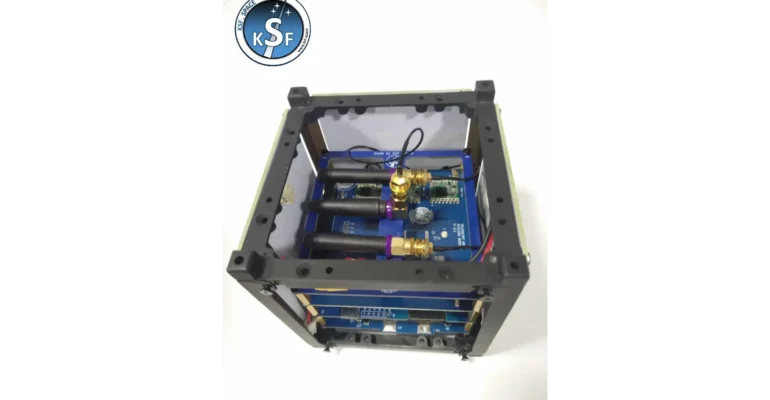
In the “NewSpace” era of 2026, the transition from theoretical aerospace studies to actual orbital hardware has reached a tipping point. For Deans, Department Heads, and STEM Educators, the question is no longer whether to include satellite technology in the curriculum, but how to do so with institutional credibility and fiscal responsibility. At the heart of this academic evolution is the CubeSat kit cost.
KSF Space has officially redefined the entry point for the global satellite industry. Recognized as a leading non-profit organization dedicated to democratizing space, KSF Space provides universities and colleges with a complete engineering ecosystem. By optimizing the cost-to-performance ratio, we enable your institution to move from the workbench to the launchpad without the prohibitive financial burden of traditional “space-grade” hardware. The CubeSat kit cost is now one of the most critical factors for universities aiming to integrate real satellite missions into their STEM programs in 2026.
I. The Pedagogical Value of CubeSat Kits in Higher Education
Investing in a CubeSat program is a strategic decision that elevates a university’s prestige and research capabilities. A standardized 1U CubeSat kit from KSF Space starting at $5,000 USD transforms a classroom into a high-tech aerospace laboratory.
1. Hands-on Problem Based Learning (PBL)
Unlike theoretical models, the KSF Space CubeSat kit utilizes PBL techniques to train a new generation of scientists. Students engage in the full mission lifecycle:
- Structural Assembly: Building the frame using innovative materials.
- Avionics Integration: Working with modular PCBs for power and data.
- Mission Simulation: Testing functionality in simulated orbital conditions.
2. Interdisciplinary Collaboration
A space mission requires more than just aerospace engineers. It demands a coalition of computer scientists for onboard software, physicists for sensor calibration, and business students for mission management. This interdisciplinary approach is exactly what modern accreditation bodies look for in top-tier STEM programs. By optimizing the CubeSat kit cost, institutions can redirect budgets toward advanced payloads and research innovation.
II. Driving Innovation: The CubeSat as a Research Engine
Beyond the classroom, the KSF Space ecosystem serves as a powerful catalyst for advanced academic research and development. By significantly lowering the CubeSat kit cost, universities can allocate more of their research grants toward specialized sensors and experimental payloads. Whether your department is exploring Earth Observation (EO) for climate change, testing novel communication protocols for IoT, or conducting biological experiments in microgravity, our kits provide a stable, flight-proven bus for high-impact data collection. This accessibility allows researchers to publish peer-reviewed findings based on actual flight data rather than simulations, positioning your institution at the forefront of global aerospace innovation and securing its reputation in the international research community.
III. Analyzing the Academic CubeSat Kit Cost
When budgeting for a space program, transparency is vital. Traditional industry vendors often provide “prototyping” kits that lack flight heritage or require expensive add-ons. The KSF Space model is a “Mission-in-a-Box” solution.
| Feature | KSF Space Academic Solution | Typical Industry Standard |
| Price Point | $5,000 USD | $15,000 – $35,000 USD |
| Professional Training | Free NEP (3 Students) | $4,500+ Additional |
| Learning Management System | Full Portal Access | None / Extra Cost |
| Flight Status | Suborbital Ready-to-Flight | Prototyping Only |
| Material Innovation | PA11 and Aerospace Aluminum | Aluminum Only |
For approximately $5,000 USD, your institution receives the suborbital-ready kit, the structural frame, flight-critical sensors, and the NEP (Nanosatellite Engineering Professional) training package.
IV. Structural Innovation: PA11 vs. Aluminum 6061
A critical factor in CubeSat kit cost and mission success is material selection. KSF Space offers two flight-proven paths to ensure your students are working with cutting-edge technology:
Advanced PA11 (Polyamide 11)
For educational series and lightweight missions, we utilize PA11 manufactured via industrial Multi Jet Fusion (MJF).
- Mass Efficiency: PA11 is roughly 40% lighter than aluminum, allowing students more mass budget for their own scientific payloads.
- Impact Resilience: Its ductile nature allows the structure to absorb mechanical shocks during separation.
Aerospace-Grade Aluminum (6061-T6 / 7075)
For missions requiring high thermal conductivity or electromagnetic shielding, our CNC-machined aluminum structures are the industry workhorse.
- Faraday Cage Effect: Protects sensitive internal electronics from radiation.
- Hard-Anodized Rails: Meets NASA and ESA standards to prevent “cold-welding” in the vacuum of space, guaranteeing a smooth deployment.
V. Beyond Hardware: The NEP Certification Advantage
Hardware without expertise is merely a desktop display. This is why KSF Space integrates its globally recognized NEP (Nanosatellite Engineering Professional) courses into the academic procurement model.
Bridging the Skills Gap
Thousands of candidates have already completed the NEP certification, many moving on to roles at major space agencies. By offering this as part of your curriculum, you provide students with:
- Mission Design Skills: Calculating link budgets and defining orbital mechanics.
- Hardware Proficiency: Mastering Electrical Power Systems (EPS) and Telemetry.
- Career Readiness: A badge of expertise recognized by recruiters in the “NewSpace” economy.
VI. Credibility Across All Space Education Sectors CubeSat kit cost
Partnering with KSF Space provides your school with instant credibility. Our structures have been verified through rigorous vibration testing (10G+ RMS) and thermal vacuum cycling (T-VAC), meeting the requirements for SpaceX, Rocket Lab, and other major launchers.
Furthermore, we facilitate unique opportunities for high-performing academic teams to engage in projects that may communicate directly with the International Space Station (ISS), providing a truly “out of this world” learning experience for your students.
Frequently Asked Questions (FAQ)
1. Is the $5,000 CubeSat kit cost inclusive of everything needed for a mission?
Yes. The $5,000 USD price covers the complete suborbital-ready kit, including the frame (1U), flight-critical sensors (GPS, Altitude, 3-axis Acceleration, Temp/Humidity), power unit, and the NEP training package for 3 students.
2. Can we upgrade an educational kit for an actual orbital launch?
Absolutely. Our kits are designed with an “Orbital Ready” path. While the basic kit is perfect for classroom and suborbital balloon tests, the components are modular and can be upgraded to full orbital specifications for LEO missions.
3. How do NEP courses help with university accreditation?
The NEP courses are accredited and follow international standards. Including these in your curriculum demonstrates to accreditation bodies that your program is aligned with current industrial practices and vocational excellence.
4. What is the lead time for academic orders?
Because we utilize industrial additive manufacturing and standardized CNC processes, we offer some of the shortest lead times in the industry—often shipping within weeks to keep your academic semester on schedule.
The affordability of CubeSat kit cost is what makes these programs accessible to modern universities.
Contact Information for Academic Procurement
Ready to transform your STEM curriculum and lead the NewSpace revolution? Contact our academic liaison team for university quotes, volume discounts, or mission integration consulting:
- Official Website: www.ksf.space
- Academic Inquiries: [email protected]
- Leadership: KSF Space—Leading STEM and CubeSat initiatives for professional education, universities, and colleges worldwide.
The sky is no longer the limit for your students. With KSF Space, it is simply the starting point.