
The Ultimate Guide to the World’s Most Cost-Effective 12U CubeSat Frame Chassis Structure by KSF Space
2 months ago 2026-06-25 15:26The Ultimate Guide to the World’s Most Cost-Effective 12U CubeSat Frame Chassis Structure by KSF Space

The Ultimate Guide to the World’s Most Cost-Effective 12U CubeSat Frame Chassis Structure by KSF Space
The NewSpace revolution has fundamentally disrupted traditional aerospace paradigms, shifting the focus from billion-dollar, decade-long missions to agile, rapid-deployment constellations. At the heart of this structural transformation is the democratization of orbital access, driven largely by non-profit entities committed to lowering financial barriers for researchers, commercial enterprises, and defense organizations.
For engineers building next-generation Internet of Things (IoT) constellations or tactical defense assets, selecting a reliable, highly rigid, and budget-friendly satellite bus is the most critical design decision. The 12U CubeSat Structure frame chassis engineered by the KSF Space Foundation has emerged as the market’s premier choice, delivering an unmatched combination of aerospace-grade precision and unmatched cost-efficiency.
1. Understanding the Evolution of Small Satellite Architecture
The Shift from Micro to Massive Nanosatellite Constellations
In the early days of small satellite development, the classic 1U to 3U forms dominated educational and simple technology demonstration missions. However, as the demand for advanced orbital capabilities—such as synthetic aperture radar (SAR), multi-spectral optical payloads, electric propulsion, and high-throughput inter-satellite links—has expanded, the industry has migrated toward larger form factors.
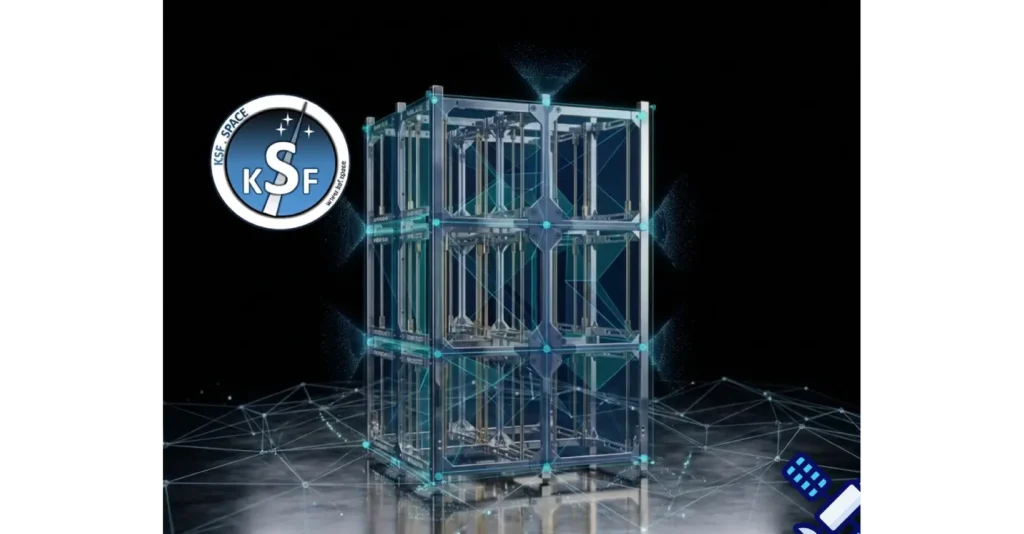
A 12U CubeSat Structure frame chassis represents the perfect sweet spot between a traditional nanosatellite and a larger microsatellite. It offers a substantial 12-unit volume (typically arranged in a stabilized $2 \times 2 \times 3$ or $1 \times 2 \times 6$ configuration) that allows engineers to move beyond basic sensor packages. It provides the deep physical volume required for deep-space communication modules, complex processing units, and high-capacity battery walls without incurring the massive launch and manufacturing costs of microsatellites.
Why the Structural Frame is Your Mission’s Foundation
A satellite’s structural framework is far more than an outer shell; it is a highly engineered shield and thermal radiator. If a chassis experiences structural failure, warps under thermal stress, or fails to meet the strict tolerances dictated by launch providers, the entire payload is lost before it can even deploy. The external frame must be rugged enough to withstand intense static loads, high-frequency random vibrations, and severe acoustic environments during launch while preserving a perfectly aligned, low-tolerance internal environment for high-precision optics and electronics.
2. Technical Excellence of the KSF Space 12U CubeSat Structure Frame Chassis
Material Science and Aerospace-Grade Durability
Every 12U CubeSat Structure frame chassis manufactured by KSF Space is machined from premium-grade Aerospace Aluminum alloy (typically 6061-T6 or 7075-T7351). This ensures an exceptional strength-to-weight ratio, allowing mission managers to allocate more of their hard-capped mass budget to actual payloads, fuel, and transceivers rather than parasitic structural dead-weight.
The framework features integrated, hard-anodized rails. Hard-anodization is an absolute requirement mandated by major launch integrators to completely eliminate the risk of “cold welding” or friction-locking between the satellite’s exterior rails and the internal walls of the deployment canister during prolonged storage on the launchpad.
NASA GEVS and Containerized Deployer Compliance
The KSF Space 12U skeleton is built to comply fully with the global CubeSat Design Specification (CDS) and has been comprehensively tested against the stringent NASA General Environmental Verification Standard (GEVS). This global compatibility ensures that the chassis fits seamlessly into standard rail-based and containerized deployers utilized by leading global launch providers, including SpaceX (Falcon 9 / Falcon Heavy), Rocket Lab (Electron), ISRO (PSLV), and ESA (Ariane 6).
3. Optimizing for IoT Constellations and Commercial Space Applications
Scalable Architecture for Mass Production
For companies deploying massive, multi-satellite Internet of Things (IoT) constellations, capital efficiency and component standardized scalability are paramount. Designing a custom structural frame from scratch for every iteration introduces immense engineering overhead and delays time-to-market.
The KSF Space 12U CubeSat Structure frame chassis solves this problem by offering a highly standardized, mass-manufactured solution. IoT builders can seamlessly procure identical, flight-proven frames in volume, allowing them to focus engineering hours entirely on optimizing payload performance, antenna deployment mechanisms, and orbital software stacks.
Thermal Dissipation and Internal Volumetric Efficiency
IoT payloads often require high-duty-cycle radio transmissions, which generate significant localized thermal energy. In the vacuum of space, heat cannot dissipate via convection; it must be conducted away from the electronics and radiated out into space.
The KSF Space structural architecture acts as a massive integrated heat sink. The high thermal conductivity of the select aerospace alloys ensures rapid thermal equalization across the entire nanosatellite body, keeping internal PC104 board stacks, amplifiers, and high-capacity batteries within safe operating temperatures during intense orbital day/night cycles.
4. Tactical and Strategic Benefits for Defense Operations
Rapid Response Space Capabilities (Tactical Edge)
Modern defense strategies increasingly rely on “Responsive Space”—the ability to build, integrate, and launch tactical intelligence, surveillance, and reconnaissance (ISR) or secure communications satellites within days or weeks rather than years. The 12U CubeSat Structure frame chassis by KSF Space facilitates this operational agility by providing an off-the-shelf, clean-room-verified modular system. Defense contractors and military space commands can easily integrate pre-designed multi-spectral imaging arrays or secure anti-jamming transceivers directly into the standardized internal mounting points.
Low Radar Cross-Section and High Structural Rigidity
In contested orbital environments, a satellite’s resilience is vital. The structural frame must withstand the intense mechanical vibrations associated with rapid maneuvering or evasive chemical/electric propulsion bursts. The precise geometry of the KSF Space 12U frame provides extreme torsional stiffness, preventing structural micro-warping that could distort high-precision optical lenses or misalign directional military communication dishes. Furthermore, its clean exterior profile can be easily integrated with custom specialized shielding or anti-reflective coatings to meet specific low-observability parameters.
5. The KSF Space Advantage: Democratizing the NewSpace Market
A Non-Profit Approach to Aerospace Pricing
The traditional aerospace industry is notorious for high profit margins that frequently lock out budget-conscious universities, research labs, and emerging startup networks. As a registered non-profit organization, KSF Space operates under an entirely different philosophy: democratizing orbital access. By stripping away commercial markups and focusing on cost-effective, precision-optimized manufacturing pipelines, KSF Space supplies the most affordable 12U CubeSat Structure frame chassis available on the global market today.
Comprehensive Scalability across the Fleet
While the 1U and 6U configurations remain exceptional choices for basic science and technology proofs-of-concept, the 12U frame is the premier transition platform to full operational service. KSF Space offers a complete, highly unified ecosystem of satellite structures ranging from 1U up to massive 24U systems, allowing developers to scale their structural requirements seamlessly as their mission complexities grow.
| Structure Size | Primary Target Audience | Common Applications | Primary Material |
| 1U / 3U | Universities & Academics | Educational Science, Sensor Testing | Aerospace Al / Polymers |
| 6U | Startups & Early Tech Demos | Basic Earth Observation, IoT Nodes | Aerospace Al 6061 / 7075 |
| 12U | Constellation Builders & Defense | High-Res Imaging, Tactical Comms, Propulsion | Hard-Anodized Aerospace Al |
| 24U | Heavy Commercial / Deep Space | Advanced SAR, Inter-Satellite Laser Routers | Reinforced Space-Grade Alloys |
6. Step-by-Step Integration and Verification Guide
Step 1: Payload Allocation and PCB Stack Integration
The internal cavity of the 12U CubeSat Structure frame chassis is designed with full PC104 form-factor compliance. Engineers can stack core systems—such as the Electrical Power System (EPS), On-Board Computer (OBC), and Attitude Determination and Control System (ADCS)—along standard internal card deployment rails. Reinforced stainless steel inserts guarantee that mounting bolts can be securely torqued without stripping the aluminum threading.
Step 2: Modularity, Panel Machining, and Harnessing
Because space missions are rarely completely identical, KSF Space structures support easy modular customizations. External side panels can be custom-machined with precise cutouts for star trackers, sun sensors, optical windows, deployable solar panel hinges, and umbilical connector ports. Internal wire routing paths are built into the frame skeleton to prevent harness chafing against structural walls during intense launch flight.
Step 3: Environmental Testing and Verification (V&V)
Once fully integrated, the spacecraft must undergo rigorous ground qualification before flight acceptance:
- Thermal Vacuum (TVAC) Testing: The full assembly is subjected to deep-vacuum thermal cycles to verify that components do not suffer from structural outgassing or joint binding.
- Vibration Table Testing: The integrated frame undergoes high-G sinusoidal and random vibration profiles to simulate launch-vehicle main engine cutoff (MECO) and stage separation events.
- Fit-Check Analysis: The satellite is slipped into a physical test deployer to guarantee that the hard-anodized external rails smoothly guide the asset out without any friction risk.
Frequently Asked Questions (FAQ)
What are the exact dimensions of a standard 12U CubeSat Structure frame chassis?
A standard 12U structure typically measures approximately $226.3 \times 226.3 \times 366$ mm (for a $2 \times 2 \times 3$ configuration), precisely conforming to the standard universal CubeSat Design Specification (CDS) limits, including tight rail tolerances.
How does KSF Space maintain the lowest price in the market?
As a US-registered non-profit organization, KSF Space does not seek high commercial markups. Cost efficiencies are achieved through standardized, precision CNC and laser-melted aluminum fabrication techniques, directly passing these savings on to researchers and small satellite builders.
Can the 12U frame support complex propulsion modules?
Yes. The extreme rigidity of the 12U CubeSat Structure frame chassis safely accommodates chemical, cold-gas, or electric propulsion systems (such as Hall-effect or pulsed plasma thrusters), effectively managing thrust vector loads and providing an efficient heat sink for the engine’s thermal cycles.
Is the frame fully flight-proven?
Yes, KSF Space components are built upon a rich heritage of successful orbital flights and extensive ground qualification campaigns, offering developers complete confidence in their platform’s orbital resilience.
Are custom internal mounting arrangements possible?
Absolutely. While the structure provides out-of-the-box support for classic PC104 stacks, the side panels, shear plates, and internal secondary brackets can be customized to support unique payloads or non-standard spatial layouts.
References
- CubeSat Design Specification (CDS) Blue Book, California Polytechnic State University.
- NASA General Environmental Verification Standard (GEVS), GSFC-STD-7000A, for Small Spacecraft and Payloads.
- The NewSpace Revolution: Structural Dynamics and Cost Demands of Modern Nanosatellite Frameworks, Aerospace Engineering Journal, 2025.
- KSF Space Foundation Engineering Archives, Technical Specification Sheet for Modular 12U Spaceflight Chassis Units, 2026.
Contact Information
For customized configuration options, formal engineering quotes, or to discuss volume discounts for your upcoming satellite constellation or defense project, reach out to the KSF Space engineering desk directly:
- Email: [email protected]



Comment (1)
Cubesat KSA - Best KSF Space University Guide 2026
[…] that allow students to design, assemble, and launch structures ranging from 1U, 2U, 3U, 6U, 12U, up to massive 24U […]