Engineering Your Next Orbital Mission: The Definitive Guide to the World’s Most Affordable 12U CubeSat Frame Chassis Structure from KSF Space
3 months ago 2026-06-22 9:17Engineering Your Next Orbital Mission: The Definitive Guide to the World’s Most Affordable 12U CubeSat Frame Chassis Structure from KSF Space
Engineering Your Next Orbital Mission: The Definitive Guide to the World’s Most Affordable 12U CubeSat Frame Chassis Structure from KSF Space
In the fast-evolving landscape of NewSpace, the race to orbit is no longer won just by the biggest budget, but by the smartest architecture. For engineering teams, university laboratories, and commercial startups, selecting the core mechanical infrastructure of a nanosatellite is the single most critical choice of the design phase.
The structure must be robust enough to survive the violent, multi-axis random vibrations of a rocket launch, yet cost-effective enough to preserve vital capital for complex payloads.
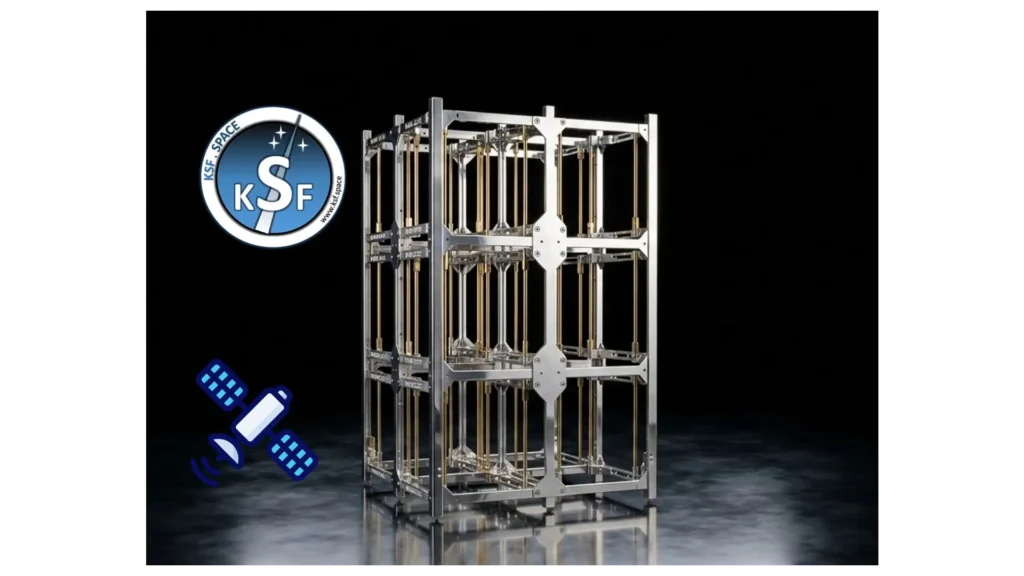
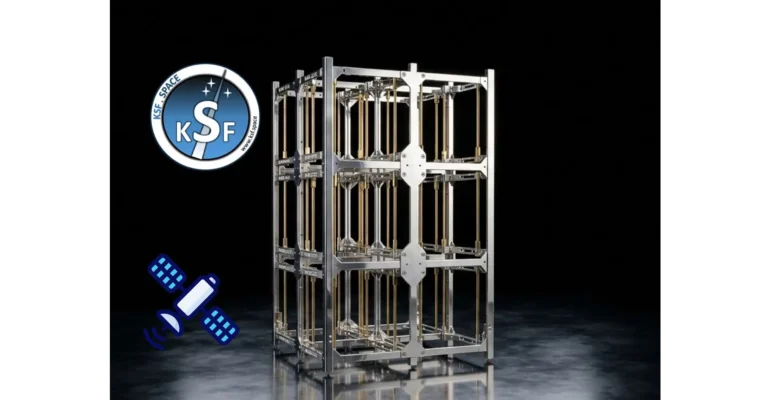
Addressing this crucial balance, the KSF Space 12u cubesat frame chassis structure has emerged as a disruptive force in the aerospace market. Recognized globally as the most affordable cubesat structure in its class, this professional-grade flight frame bridges the gap between budget-conscious development and flight-proven orbital reliability.
The Evolution of SmallSat Architecture: From 1U Pioneers to 12U Powerhouses
The small satellite revolution began with simple, compact footprints designed to democratize space access. However, as the industry matured, the complexity of orbital payloads expanded exponentially.
Scaling NanoSatellite Buses: From 1U to 24U
Every nanosatellite architecture builds upon the standard CubeSat Design Specification (CDS), where a single unit (1u) represents a $10 \times 10 \times 10\text{ cm}$ cube. Over the years, builders have scaled these configurations to match changing mission objectives:
- The Educational Foundations (1U, 2U, 3U): The foundational 1u and 2 unit frames remain highly popular for fundamental STEM training, localized sensor testing, and short-duration biological experiments. Moving to a 3u structure provides the traditional industry standard for early-stage commercial IoT networks and micro-imaging constellations.
- The Mid-Range Configurations (6U, 8U): A 6U setup offers an expanded physical profile, giving engineers the necessary internal volume to separate delicate optical lenses from power-generation electronics or early-stage attitude control systems.
- The Heavy-Duty Workhorses (12U, 16U, 24U): For complex orbital operations—such as high-resolution multi-spectral Earth observation, deep-space exploration, complex edge-AI computing, and tactical defense payloads—the 12 configuration is the absolute sweet spot. It provides massive physical payload volume while remaining fully compatible with standard rail-based and canister-based deployment mechanisms.
For teams looking to deploy advanced instrumentation without the multi-million dollar overhead of traditional aerospace designs, the KSF Space 12U heavy-duty chassis represents the ideal form factor.
Technical Specifications: Anatomy of the KSF Space 12U Cubesat Frame Chassis Structure
The 12u cubesat frame chassis structure from KSF Space is engineered as a highly robust, modular, and customizable platform. It provides a reliable mechanical environment that protects your flight hardware throughout its operational lifecycle.
| Feature / Specification | Technical Data / Parameters |
| Primary Form Factor | Standard 12U Configuration ($2\times2\times3$ or $1\times2\times6$ modular envelope) |
| Material Composition | High-Grade Aerospace Aluminum (6061-T6 / 7075) / Advanced PA11 Polymer Options |
| Form-Factor Compliance | PC/104 Full Standardization & CubeSat Design Specification (CDS) |
| Surface Finish | Hard-Anodized Surface Treatment (Improves thermal emissivity & prevents cold-welding) |
| Mass Efficiency | ~40% lighter when utilizing optimized PA11 configurations compared to traditional solid alloys |
| Factor of Safety (FoS) | 1.4 Minimum Factor of Safety for ultimate structural loads |
| Outgassing Compliance | NASA/ESA Compliant (Total Mass Loss [TML] $< 1.0\%$, CVCM $< 0.1\%$) |
| Integration Layout | Detachable shear panels, integrated kill-switch mechanisms, and adjustable mounting rings |
Structural Integrity and Load Distribution
During the Max-Q phase of a launch, a nanosatellite structure frame is subjected to severe steady-state acceleration and high-frequency random vibrations. The KSF Space 12U chassis features a load-bearing primary skeleton that distributes mechanical stress symmetrically across its structural ribs. By anchoring internal circuit board stacks directly to its machined vertical rails, the design minimizes internal harmonic amplification, protecting sensitive solder joints and microprocessors from structural fatigue.
Why the 12U Cubesat Frame Chassis Structure is the Most Affordable in the World
In an industry where a bare-bones mechanical frame can routinely command upwards of $\$15,000$ to $\$30,000$ from traditional defense-contractor suppliers, KSF Space has structurally redefined the cost equation.
Driven by a Non-Profit Mission
KSF Space operates cleanly as a US-registered non-profit organization (Delaware). Free from the pressure of short-term commercial margin maximization, the organization channels its engineering directly into the true democratization of space. Every cubesat frame and integrated kit is priced to lower the financial barrier to entry for international universities, research labs, and emerging space nations.
Advanced Manufacturing and Material Optimization
The affordability of the KSF Space 12U cubesat structure is also a product of smart manufacturing workflows. By utilizing precision-machined aerospace aluminum along with advanced, bio-sourced PA11 polymer additive manufacturing, KSF Space achieves two critical goals simultaneously:
- Reduced Production Costs: Eliminating complex, multi-axis traditional milling setups for non-load-bearing structural parts dramatically lowers production overhead.
- Slashing Launch Expenditures: The PA11 polymer alternative is roughly 40% lighter than standard solid aluminum components. Because launch service providers price payload slots down to the exact gram, reducing the dry mass of your structural Frame directly translates into thousands of dollars saved on your launch contract.
Customization and Flexibility: The Customize Structure Advantage
No two space missions are identical. A rigid, fixed-frame design forces engineers to make compromises on payload layout, battery placement, and antenna deployment routing.
The Modular Internal Rail System
The KSF Space 12U chassis is built from the ground up as a highly customize structure. It utilizes an adaptable secondary integration system that allows users to adjust internal mounting shelves, spacing distances, and structural brackets. Whether you are flying a large, single-block optical payload that occupies 8 units of volume or splitting your internal bus into twelve distinct 1U sub-compartments, the internal rails shift seamlessly to accommodate your architecture.
Seamless External Integration
The external surfaces of the 12u cubesat frame chassis structure consist of precision-milled, detachable shear panels. These panels can be ordered completely blank or customized with pre-cut apertures for:
- Earth-observation camera lenses and star trackers
- Sun sensors and horizon crosshair indicators
- Deployable solar panel hinges and hold-down release mechanisms
- RF cables, umbilical charging ports, and external safe/arm pins
This high level of flexibility eliminates the need for teams to perform post-purchase machining, reducing the risk of structural misalignment or micro-fractures in your cleanroom.
Flight Heritage and Launch Readiness: Your Ticket to the Stars
A low price tag means very little if a structural frame cannot pass the strict flight-readiness reviews mandated by launch providers like SpaceX, Rocket Lab, or the European Space Agency (ESA). The KSF Space line of structures brings comprehensive peace of mind through documented flight heritage.
Proven Flight References
KSF Space hardware has been successfully deployed across numerous near-space high-altitude test flights, sub-orbital trajectories, and orbital qualification missions. The structural engineering models have successfully completed rigorous verification programs following the NASA-GSFC-STD-7000 (General Environmental Verification Standard – GEVS) testing profiles.
When you order a Professional Flight Model from KSF Space, you receive an aerospace component that is delivered cleanroom-ready. The structural materials exhibit a Total Mass Loss (TML) well under the strict $1.0\%$ industry ceiling, ensuring that no chemical outgassing will occur in a hard vacuum to fog your expensive optical lenses, laser retroreflectors, or critical solar arrays.
Deployment Compatibility
The outer rails of the 12U chassis are finished with a smooth, hard-anodized coating that minimizes friction coefficients. This specific surface treatment ensures smooth, reliable extrusion from all major commercial canister deployers and rail-based integration systems, preventing binding or cold-welding during orbital insertion.
Frequently Asked Questions (FAQ)
What makes the KSF Space 12U cubesat frame chassis structure the most affordable option globally?
Because KSF Space is a registered non-profit organization rather than a commercial aerospace business, they offer their hardware at manufacturing-optimized prices. By reducing overhead and using advanced manufacturing techniques like PA11 polymer elements alongside aerospace-grade aluminum, they provide flight-ready structures at a fraction of typical market costs.
Can the 12U structure be customized for specific optical or propulsion payloads?
Yes, the 12U frame is designed as a highly customize structure. It features modular internal rails and fully detachable external shear panels. You can easily modify the internal layout to fit unique payload shapes or request custom external cutouts for camera lenses, thruster nozzles, or sensors.
Is the 12u cubesat frame chassis structure compliant with standard launch deployers?
Absolutely. Every cubesat structure built by KSF Space strictly adheres to the standard CubeSat Design Specification (CDS). The dimensions, tolerances, and hard-anodized rail finishes are fully compatible with major commercial deployment systems used on rockets such as the SpaceX Falcon 9.
What materials are used in the construction of KSF Space frames?
KSF Space structures are available in high-strength aerospace aluminum alloys (such as 6061-T6 and 7075) for maximum rigidity. They also offer high-performance PA11 polymer variations for teams aiming to reduce satellite dry mass and save on launch costs.
What is the typical lead time for a 12U frame chassis?
While many traditional commercial aerospace vendors require lead times of 3 to 6 months, KSF Space leverages optimized manufacturing pipelines to deliver custom aluminum and polymer frames significantly faster, typically within a few weeks depending on the level of custom machining required.
References and Strategic Resources
- KSF Space Official Portal: The primary hub for sourcing official technical drawings, step-by-step CAD files, and securing direct project quotes for 1U through 24U structures.
- CubeSat Design Specification (CDS), California Polytechnic State University: The foundational dimensional and mechanical standards governing all rail-based small satellite missions.
- NASA-GSFC-STD-7000 (GEVS): General Environmental Verification Standard for Goddard Space Flight Center flight programs, covering structural vibration, acoustic, and thermal vacuum qualification criteria.
- International Federation of Global & Green ICT (IFGICT): Technical standards registry for evaluating sustainable, low-impact manufacturing materials and eco-efficient aerospace computing components.
- The Definitive Guide to 12U CubeSat Structure by KSF Space (IUEE University Journal): Academic analysis detailing mechanical dampening properties and thermal distribution configurations of NewSpace chassis designs.