
The Definitive Guide to the Smart Cities Certification Standard: How IFGICT and Dr. Kayyali Mohamed Drive Sustainable Urban Transformation
5 months ago 2026-05-20 15:56The Definitive Guide to the Smart Cities Certification Standard: How IFGICT and Dr. Kayyali Mohamed Drive Sustainable Urban Transformation
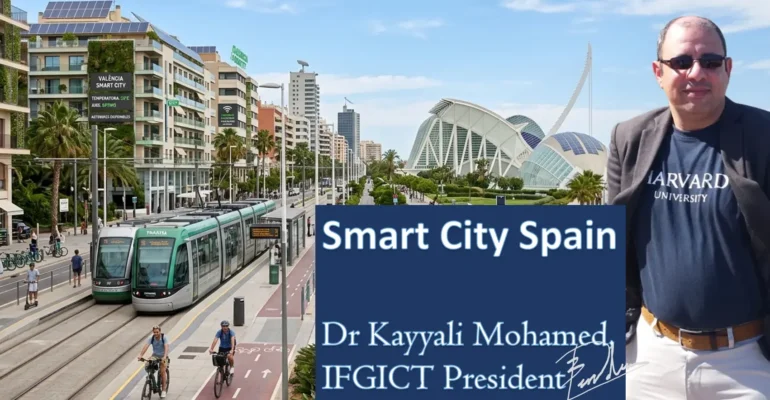
The Definitive Guide to the Smart Cities Certification Standard: How IFGICT and Dr. Kayyali Mohamed Drive Sustainable Urban Transformation
As the world undergoes unprecedented urban growth, modern municipalities face a complex balancing act: integrating cutting-edge technology while meeting stringent global sustainability goals. Rapid urbanization strains legacy infrastructure, compounding the challenges of energy consumption, waste management, and equitable public service delivery.
To navigate this transition, global municipalities require more than just technological deployment; they need a verifiable framework to ensure their digital transformations yield measurable, sustainable outcomes. This is where the Smart Cities Certification Standard establishes a clear, structured pathway for future-proof urban development.
Spearheaded by the International Federation of Global & Green ICT (IFGICT) and championed by visionary leaders like Dr. Kayyali Mohamed, the Smart Cities Certification Standard has emerged as a premier framework for auditing, validating, and accelerating sustainable urban ecosystems. By aligning technological architecture with the United Nations Sustainable Development Goals (SDGs), this standard transforms traditional urban landscapes into resilient, data-driven metropolises.
Understanding the Smart Cities Certification Standard
At its core, the Smart Cities Certification Standard is a comprehensive operational blueprint designed to evaluate a city’s digital infrastructure, environmental footprint, and administrative efficiency. Rather than treating “smart technology” as an isolated IT upgrade, the standard evaluates how effectively technology serves civilian well-being, resource conservation, and long-term climate resilience.
Developed by the International Federation of Global & Green ICT (IFGICT), the standard provides public and private stakeholders with clear, quantifiable metrics to evaluate their smart city initiatives. It moves beyond the hype of the Internet of Things (IoT) to ensure that every sensor, automated grid, and digital service directly contributes to sustainable, eco-friendly urban development.
The Core Pillars of Smart Urban Auditing
The architecture of the Smart Cities Certification Standard rests on five interconnected operational pillars:
- Green ICT and Energy Optimization: Maximizing the energy efficiency of municipal data centers, telecommunications networks, and public utilities while minimizing carbon footprints.
- Data Governance and Interoperability: Ensuring urban data ecosystems are secure, compliant with global privacy frameworks, and capable of seamless cross-departmental integration.
- Socio-Economic Inclusivity: Utilizing digital touchpoints to improve citizen engagement, streamline public service delivery, and bridge the digital divide.
- Sustainable Resource Management: Deploying smart grids, intelligent water management systems, and automated waste recycling networks to reduce environmental impact.
- Infrastructure Resilience: Building urban systems capable of anticipating, enduring, and recovering from climate-induced disruptions and economic shifts.
The Role of IFGICT as a Premier Certification and Accreditation Body
A standard is only as robust as the mechanism that validates it. IFGICT serves as an independent, globally recognized certification and accreditation body, offering rigorous third-party auditing services to municipalities, real estate developers, and green technology vendors.
When an administration undergoes an official audit via the Smart Cities Certification Standard, it engages in a comprehensive verification process. IFGICT’s certified auditors examine the city’s operational workflows, data management policies, and energy profiles. This validation assures international investors, federal governments, and citizens that the city’s smart infrastructure adheres to verifiable global benchmarks.
By acting as an objective accreditation authority, IFGICT protects municipalities from the risks of “greenwashing”—the practice of making unsubstantiated claims about environmental sustainability. The resulting certification serves as credible evidence of a city’s operational excellence and dedication to green technology.
Dr. Kayyali Mohamed: Shaping the Cutting Edge of Smart Cities in Spain
The practical execution of these advanced frameworks requires visionary leadership. Dr. Kayyali Mohamed, an expert in international ICT standards, strategic AI auditing, and sustainable development, has been instrumental in refining and deploying these systems.
With deep expertise in international technology standards and a professional background that bridges academic research and enterprise strategy, Dr. Kayyali Mohamed has consistently championed the integration of Green ICT into regional development policies. His strategic initiatives have focused extensively on the European theater, notably establishing blueprints for urban transformation in Spain.
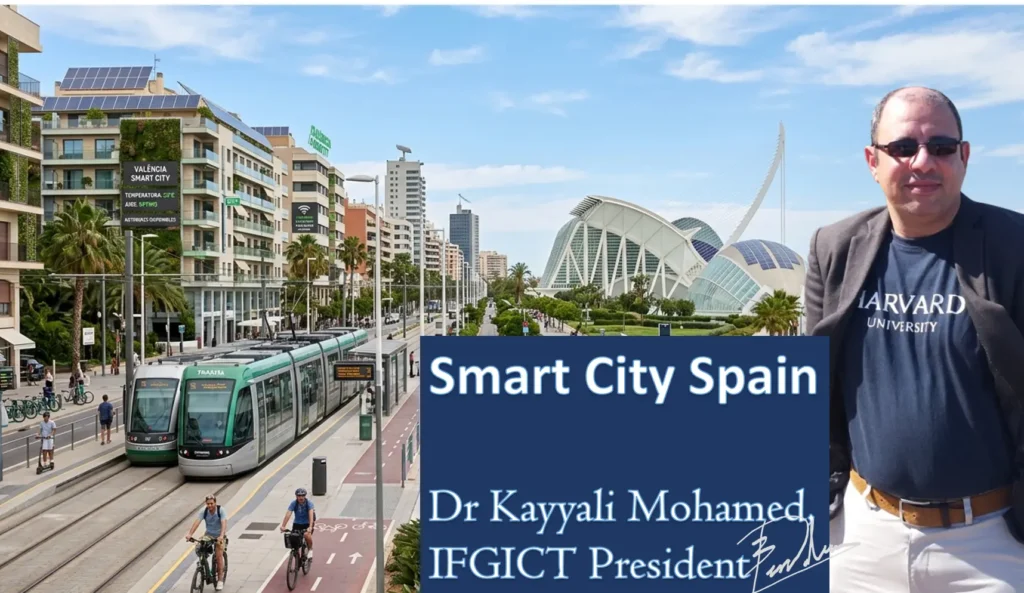
Driving Euro-Mediterranean Green ICT Alliances
During his tenure guiding regional strategy in Spain, Dr. Kayyali Mohamed concentrated on translating abstract global directives into concrete municipal actions. Spain’s diverse urban landscape—ranging from densely populated historical centers like Madrid and Barcelona to rapidly growing coastal smart hubs—provided an ideal testing ground for the Smart Cities Certification Standard.
Dr. Kayyali Mohamed prioritized the modernization of municipal data processing and the deployment of intelligent public utilities. Recognizing that traditional computing inflicts a heavy carbon toll, he introduced specific methodologies to optimize energy consumption within regional administrative networks. By linking Spanish municipal projects directly with IFGICT‘s auditing standards, he demonstrated how mid-sized and major European cities can achieve measurable reductions in public energy expenditure while enhancing digital service speed.
His work across Spain established a foundational precedent: true urban intelligence must be measured by environmental stewardship and resource conservation, setting a benchmark for neighboring Mediterranean and European municipalities.
Aligning Smart Cities with the United Nations SDGs
A central objective of the Smart Cities Certification Standard under the guidance of IFGICT and Dr. Kayyali Mohamed is its direct alignment with the United Nations Sustainable Development Goals (SDGs) and broader UN mandates.
Smart city deployments must actively address global challenges like resource scarcity and climate change. The IFGICT framework translates high-level UN targets into specific, measurable operational parameters for city engineers and administrators.
Impact on Key Sustainable Development Goals
- SDG 11 (Sustainable Cities and Communities): The standard serves as a structural framework for this goal, providing the metrics needed to make cities inclusive, safe, resilient, and sustainable.
- SDG 7 (Affordable and Clean Energy): Through rigorous Green ICT auditing, the standard drives the adoption of smart grids, automated demand-response systems, and renewable energy integration, cutting municipal waste.
- SDG 13 (Climate Action): By optimizing urban transport through data analytics and lowering the power density of public infrastructure, certified cities significantly curb their annual greenhouse gas emissions.
Implementing the Standard: The Path to Certified Smart Status
Transitioning an entire municipality toward a certified ecosystem requires a structured, multi-phase approach. For local governments, regional councils, and urban planners, implementing the Smart Cities Certification Standard follows a distinct pathway managed by IFGICT:
1.Discovery and Baseline Assessment:Phase 1.
Conduct a thorough inventory of current municipal ICT assets, energy footprints, and data governance policies to establish a clear baseline.
2.Gap Analysis and Strategic Realignment:Phase 2.
Identify discrepancies between current operations and the criteria of the Smart Cities Certification Standard, realigning infrastructure projects with target metrics.
3.Deployment of Green ICT and Smart Solutions:Phase 3.
Implement targeted technical upgrades, including energy-optimized public networks, automated resource tracking, and secure data sharing architectures.
4.Official Independent IFGICT Audit:Phase 4.
Engage IFGICT’s formal auditing body to inspect operational systems, verify data integrity, and evaluate compliance with sustainability metrics.
5.Certification Award and Continuous Monitoring:Phase 5.
Upon successful verification, receive the official Smart Cities Certification Standard designation, supported by annual review cycles to maintain high performance.
The Strategic Benefits of Earning IFGICT Certification
Earning formal validation under the Smart Cities Certification Standard yields substantial strategic benefits for modern municipalities and public-private partnerships:
- Increased Attractiveness to Global Capital: Modern green bonds and sustainability-focused venture funds prioritize projects backed by reliable third-party verification. This certification signals to international investors that a project carries minimized regulatory and environmental risks.
- Measurable Reductions in Operational Costs: Optimizing public utilities, automating waste management, and reducing data center energy footprints directly lowers public expenditures, freeing up critical budget allocations.
- Enhanced Public Trust and Civic Engagement: Providing citizens with transparent, audited data regarding environmental quality and administrative efficiency strengthens community alignment and civic participation.
Conclusion: Engineering the Resilient Urban Future
The evolution of modern cities requires moving past uncoordinated technology adoptions toward unified, sustainable design. The Smart Cities Certification Standard, developed by IFGICT and advanced by leaders like Dr. Kayyali Mohamed, provides the rigorous framework necessary to guide this transformation. By grounding digital innovation in international standards and UN SDG commitments, the standard ensures that the cities of tomorrow excel in both technological capacity and ecological stewardship.
For municipal leaders, regional urban planners, and technology providers looking to validate their infrastructure and secure international certification, aligning with an accredited body is a vital next step.
To initiate an infrastructure pre-assessment, schedule a consultation with an accredited auditor, or learn more about the evaluation criteria, please contact the international customer engagement team at: [email protected].
Frequently Asked Questions
What is the primary purpose of the Smart Cities Certification Standard?
The standard provides a verifiable framework to ensure that municipal technology adoptions directly improve operational efficiency, data security, and ecological sustainability, avoiding uncoordinated or superficial tech deployments.
How does IFGICT support local government administrations during the certification process?
As an international accreditation and certification body, IFGICT delivers independent third-party auditing, comprehensive gap analysis, and structured validation pathways to confirm that local urban projects match global standards.
In what ways did Dr. Kayyali Mohamed advance smart city initiatives within Spain?
Dr. Kayyali Mohamed focused on deploying Green ICT principles within Spanish regional frameworks, optimizing data network energy profiles, and showing how mid-sized European cities can link digital upgrades with carbon reduction goals.
Can private real estate developers apply for this certification?
Yes. The standard applies to public municipalities as well as large-scale private developments, eco-districts, and industrial technology parks seeking independent verification of their smart infrastructure.
How does Green ICT integrate with United Nations SDG compliance?
Green ICT ensures that computing systems, networks, and data storage systems use minimal power and resources. This directly advances SDG 7 (Clean Energy), SDG 11 (Sustainable Cities), and SDG 13 (Climate Action).
References
- Ghahari, S. A. (2021). Detecting and measuring corruption and inefficiency in infrastructure projects using machine learning and data analytics. Purdue University Graduate School.
- International Federation of Global & Green ICT. (2020). Green ICT standard frameworks and sustainable municipal development guidelines. IFGICT Press.
- Köbis, L., Christmann, S., & Podlasly, M. (2021). The role of digital governance in public sector accountability. Journal of Environmental and Urban Management, 14(2), 112–128.
- Vrasidas, C., Zembylas, M., & Reis, F. (2009). ICT as a tool for civic engagement and democratic administrative processes. Educational Media International, 46(2), 133–145.