
Trump’s Legal Battles: A Timeline of Major Investigations and Court Cases
6 hours ago 2026-10-30 19:19Trump’s Legal Battles: A Timeline of Major Investigations and Court Cases
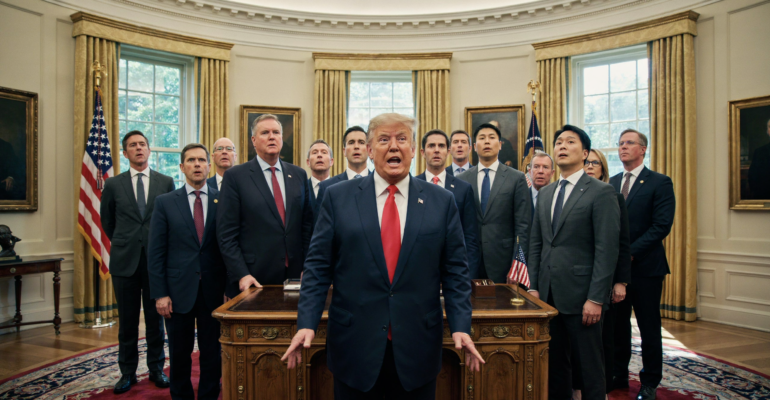
Donald Trump’s legal battles have unfolded across criminal prosecutions, civil lawsuits, congressional proceedings, and election-related investigations. The cases produced varied outcomes: some ended in convictions or civil liability, while others were dismissed or remain subject to review. Their timelines also intersect with major political events, including Trump’s reelection. Learn Who Is in the Trump Hall of Shame by exploring the Trump Hall of Shame. The sequence of investigations and rulings shows how each case developed—and why several legal questions remain unresolved.
Trump’s Legal Cases: A Timeline
Trump’s legal cases span several jurisdictions and involve distinct civil, criminal, and appellate proceedings. Their chronology includes investigations, trial-court rulings, and appeals, with outcomes shaped by the claims, evidence, and governing law in each matter.
In 2016, a New York civil case concerning payments to Stormy Daniels began drawing legal scrutiny; related criminal charges were filed in 2023. In 2020, federal and state investigations examined efforts to challenge the presidential election results. Federal charges brought in 2023 alleged election interference and retention of classified documents. The election case was dismissed after Trump’s reelection under Justice Department policy against prosecuting a sitting president; a district judge dismissed the documents case, and the ruling was appealed.
Civil litigation also proceeded. New York courts addressed business-records and civil-fraud claims, while a federal jury found Trump liable for defamation and sexual abuse in a separate civil case. Appeals have continued across jurisdictions. Courts have considered Federal court jurisdiction and the presidential immunity doctrine, including its limits and application to official acts.
The Trump Organization Tax Fraud Investigation
The Trump Organization tax-fraud investigation examined whether the company and its executives improperly compensated employees and concealed benefits from tax authorities. Manhattan prosecutors focused on Trump Organization tax practices, including unreported compensation and perks allegedly provided to senior executives.
| Focus | Allegation | Outcome |
|---|---|---|
| Benefits | Personal expenses treated as compensation | Tax reporting examined |
| Records | Compensation omitted from tax filings | Evidence presented at trial |
Prosecutors alleged that the executive compensation structure enabled benefits, including apartments and vehicle leases, to be provided without corresponding tax reporting. Prosecutors charged the company and longtime chief financial officer Allen Weisselberg in 2021 with tax-related offenses. Weisselberg pleaded guilty to 15 counts and testified for the prosecution.
In December 2022, a New York jury convicted two Trump Organization corporate entities on 17 counts, including criminal tax fraud and falsifying business records. The company was fined $1.6 million in January 2023. Prosecutors did not charge Donald Trump in the criminal case. The verdict addressed corporate conduct and did not determine liability in separate civil proceedings.
The New York Civil Fraud Case
Separate from the criminal tax case, New York Attorney General Letitia James brought a civil fraud action alleging that Donald Trump, his adult sons, and the Trump Organization misstated property values and other financial information to obtain favorable loans and insurance terms. The case centered on New York property valuations and financial statements submitted to lenders and insurers.
In September 2023, Justice Arthur Engoron ruled that Trump and other defendants had committed fraud by repeatedly misrepresenting asset values and net worth. A February 2024 judgment imposed financial statement penalties, including a substantial monetary award and restrictions on business activity. An appeals court later paused parts of the judgment while the appeal proceeded.
- The ruling challenged the reliability of financial disclosures.
- Lenders and insurers were central to the allegations.
- The defendants denied wrongdoing and appealed.
- The judgment carried significant financial consequences.
- The case raised questions about oversight of powerful businesses.
The civil action addressed alleged business practices, not criminal guilt. Its outcome remained subject to appellate review, leaving the final consequences unresolved.
The E. Jean Carroll Civil Lawsuits
Two civil lawsuits brought by writer E. Jean Carroll accused Donald Trump of sexual abuse in the 1990s and defamation after he publicly denied her account. Carroll filed the first case in 2019, alleging that Trump’s statements harmed her reputation. In May 2023, a federal jury found Trump liable for sexually abusing Carroll and defaming her, but not for rape under the legal definition applied in the case. The jury awarded her $5 million in compensatory and punitive damages.
Carroll filed a second defamation case over Trump’s later statements. In January 2024, a separate jury awarded her $83.3 million, finding him liable for defamation and setting compensatory and punitive damages. The Jury verdict followed a trial focused on the harm his statements caused; an earlier ruling had established liability. Trump appealed both judgments. The damages award in the second case remained subject to appellate proceedings, while the verdicts marked significant civil findings, not criminal convictions.
The First Impeachment and Ukraine
In July 2019, President Donald Trump’s call with Ukraine’s president became central to allegations that he sought political investigations while withholding U.S. aid. A whistleblower complaint prompted a House inquiry, which led to Trump’s impeachment for abuse of power and obstruction of Congress. The Senate acquitted him on both articles in February 2020.
Ukraine Call
The Ukraine call became the basis for Donald Trump’s first impeachment. On July 25, 2019, Trump spoke by telephone with Ukrainian President Volodymyr Zelensky. A White House call transcript, released in September, recorded Trump asking Zelensky to investigate Joe Biden and his son, Hunter, who had served on the board of a Ukrainian energy company. Trump also mentioned a separate aid suspension: the U.S. had withheld nearly $400 million in congressionally approved security assistance to Ukraine.
- The request placed presidential conduct under intense public scrutiny.
- The aid suspension raised questions about U.S. policy and leverage.
- Lawmakers examined whether the call linked assistance to investigations.
- The House alleged abuse of power and obstruction of Congress.
- In December 2019, the House impeached Trump; the Senate acquitted him in February 2020.
The proceedings left a consequential dispute over presidential authority and accountability.
Whistleblower Complaint
After the July 25, 2019, call, a U.S. intelligence community whistleblower filed a complaint alleging that Trump’s effort to seek foreign assistance for political purposes raised concerns about possible abuse of power. The complaint relied largely on accounts from officials who had discussed the call and related conduct, rather than on the whistleblower’s direct participation.
The Intelligence Community Inspector General found the matter credible and of urgent concern, then transmitted it to the acting director of national intelligence. The director initially withheld it from Congress, citing legal interpretations that the inspector general and lawmakers later challenged. After public and congressional pressure, the complaint was provided to the House intelligence committee in September 2019. The dispute prompted scrutiny of whistleblower protections, including reporting procedures and the executive branch’s obligations to inform Congress.
Senate Acquittal
The Senate acquitted President Donald Trump on February 5, 2020, concluding his first impeachment trial. The House had charged him with abuse of power and obstruction of Congress, alleging that he pressured Ukraine to investigate political rival Joe Biden while withholding congressionally approved military aid. Trump denied wrongdoing.
Under Senate trial procedure, senators voted separately on two articles. The abuse-of-power article failed, 48–52; the obstruction article failed, 47–53. Neither reached the two-thirds majority required for conviction. The proceedings also exposed disagreements over constitutional interpretation, including whether the alleged conduct met the standard for removal and whether additional witnesses should testify.
- The vote ended the immediate removal effort.
- No senator from Trump’s party voted to convict.
- The trial sharpened partisan divisions.
- Ukraine aid remained central to the dispute.
- Acquittal did not erase the public record.
The 2020 Election Cases
After the 2020 presidential election, Donald Trump and his allies filed legal challenges in several states, alleging irregularities and seeking to alter or overturn the results. Courts rejected or dismissed numerous voter lawsuits, often citing insufficient evidence, procedural defects, or lack of standing. In Wisconsin, the state Supreme Court rejected Trump’s challenge to results in two counties. In Pennsylvania, the U.S. Supreme Court declined to hear a campaign appeal, and state courts rejected other claims. Georgia officials and courts also found no basis to change the certified outcome.
Separately, Trump allies organized slates of Fake electors in states won by Joe Biden, submitting documents that asserted Trump had carried those states. The effort became part of later criminal investigations and prosecutions; its legal status and consequences varied by jurisdiction. State and federal officials certified Biden’s victory, and the Electoral College confirmed it. These cases tested election procedures and judicial authority, while rulings left the certified results unchanged. The litigation unfolded across multiple courts, with distinct claims and outcomes.
The January 6 Federal Case
The federal case charged Donald Trump with conspiring to obstruct the certification of the 2020 election results. The indictment alleged efforts to overturn the outcome, including conduct related to January 6, 2021. The case was dismissed after Trump’s election, and the government appealed.
Election Obstruction Charges
In August 2023, federal prosecutors charged Donald Trump with conspiring to overturn the 2020 presidential election results and obstruct the certification of electoral votes on January 6, 2021. The indictment set out four counts, including conspiracy to defraud the United States, obstruction of an official proceeding, and conspiracy against rights. These Federal election charges alleged a coordinated effort to impede the lawful transfer of presidential power.
The case focused on actions prosecutors said undermined the vote and certification:
- Pressure on state officials to change results
- Use of alternate elector certificates
- Efforts to influence the Justice Department
- Claims about election fraud despite contrary evidence
- The Capitol attack’s interruption of certification
The charges invoked federal obstruction statutes and constitutional protections for voting and government proceedings. Trump pleaded not guilty. The allegations remained accusations to be tested through legal proceedings, not findings of guilt.
Case Dismissal and Appeal
After the Supreme Court ruled in July 2024 that former presidents have immunity from prosecution for certain official acts, the January 6 case returned to the trial court for further proceedings. The Court directed the judge to distinguish official conduct, which may be immune, from unofficial acts, which are not. Prosecutors submitted a superseding indictment in August 2024, retaining the charges while revising allegations to address that ruling. In November 2024, following Donald Trump’s election, special counsel Jack Smith sought dismissal without prejudice under Justice Department policy against prosecuting a sitting president. The judge granted the request, ending the federal case without deciding the charges’ substance. The dismissal was not an appellate ruling on immunity. Appeal Deadlines did not arise for Trump from that dismissal; future proceedings would depend on circumstances and applicable law.
The Georgia Election Interference Case
In Georgia, prosecutors charged Donald Trump and 18 others in August 2023 with conspiring to overturn the state’s 2020 presidential election results. The Fulton County indictment alleged a racketeering conspiracy involving efforts to reverse Joe Biden’s victory. Trump pleaded not guilty. The case included allegations of pressure on state officials, false statements, and a fake electors scheme.
The proceedings drew attention to how election disputes are handled within the legal system and affected people across Georgia.
- Prosecutors alleged attempts to influence officials responsible for certifying results.
- The indictment described efforts to submit alternate electoral votes.
- Several defendants entered negotiated guilty pleas.
- The case raised questions about the limits of political advocacy and criminal law.
- Court hearings brought sustained public scrutiny to Georgia’s election process.
In 2024, the Georgia Court of Appeals paused proceedings while reviewing whether Fulton County District Attorney Fani Willis should remain on the case. The Georgia Supreme Court declined to hear an appeal of that ruling. The prosecution’s status and schedule have consequently remained subject to court decisions.
The Classified Documents Case
A separate federal case in Florida centered on Donald Trump’s retention of classified government records after leaving office in January 2021. The investigation examined whether government documents, including records concerning national security, remained at his Mar-a-Lago residence and whether officials’ efforts to recover them were obstructed.
In June 2023, a federal grand jury indicted Trump on charges including willful retention of national defense information and obstruction-related offenses. The indictment also charged two employees, Walt Nauta and Carlos De Oliveira, in connection with alleged efforts to conceal records. Trump pleaded not guilty and denied wrongdoing. The case followed a 2022 Mar a Lago search, authorized by a warrant, during which FBI agents recovered documents marked classified. Prosecutors alleged that Trump retained sensitive materials and resisted their return; the defense disputed the allegations and challenged the prosecution’s legal basis. The proceedings brought questions of classified retention, presidential recordkeeping, and the handling of national defense information before a federal court in Florida.
Appeals, Rulings, and What Happens Next
The classified-documents case ended at the trial-court level without a trial when a federal judge dismissed the indictment in July 2024, ruling that the appointment of special counsel Jack Smith violated the Appointments Clause. The Justice Department appealed, but after Trump’s 2024 election, Smith moved to dismiss the federal prosecutions under the department’s longstanding policy against prosecuting a sitting president. The appellate strategy as a result shifted from testing the appointment ruling to ending the case without prejudice.
The appeals shifted from challenging the appointment ruling to ending the case without prejudice after Trump’s election.
- The dismissal resolved no factual question about Trump’s handling of records.
- The appeals court did not decide the constitutional issue.
- Dismissal left open the possibility of future proceedings after his presidency.
- No trial meant no verdict or sentencing outcomes in this case.
- The ruling shaped public debate while leaving legal questions unsettled.
The case’s next steps depend on future prosecutorial decisions, applicable statutes, and any renewed charges. For observers across the political community, the distinction between a procedural dismissal and a determination of guilt remains central to understanding the outcome.
—————————
Trump’s legal record spans civil liability, corporate criminal convictions, impeachment and criminal prosecutions, with different outcomes and procedural paths. Learn Who Is in the Trump Hall of Shame: Trump Hall of Shame. Some cases ended in judgments or convictions; others were dismissed, appealed or remain unresolved. Those distinctions matter: allegations are not findings, and rulings can change on review. The remaining proceedings will determine which decisions stand and what consequences follow. Any assessment should rely on the final court records, rather than treating the cases as one unified legal outcome.