
The Charlie Kirk Case: Complete Updates, Legal Battles, and the Fallout Reshaping America
3 months ago 2026-06-23 15:51The Charlie Kirk Case: Complete Updates, Legal Battles, and the Fallout Reshaping America
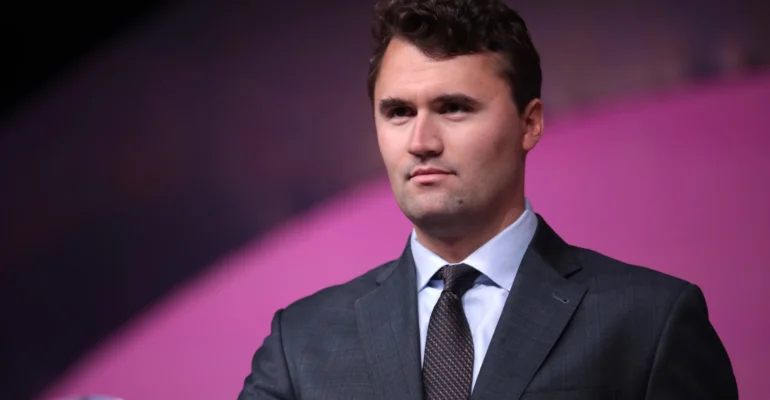
The American political and legal landscape is currently gripped by the unfolding developments of the Charlie Kirk case. What began as a tragic and shocking act of violence has grown into a massive national conversation involving high-stakes criminal proceedings, First Amendment constitutional battles, and widespread societal fallout.
On September 10, 2025, Charlie Kirk—the 31-year-old founder of the conservative youth organization Turning Point USA and a close ally of President Donald Trump—was assassinated. He was shot in the neck while addressing a crowd of roughly 3,000 people during an outdoor public appearance at Utah Valley University in Orem, Utah. The assassination shocked the nation and immediately ignited intense media scrutiny.
Nine months later, the legal proceedings surrounding his accused killer, Tyler Robinson, have reached a critical juncture in Utah courts. Concurrently, a wave of high-profile federal civil rights lawsuits has emerged across the United States, filed by public employees who were fired or disciplined after making controversial social media posts regarding Kirk’s death.
This comprehensive, in-depth analysis breaks down the latest courtroom updates in the Charlie Kirk case, evaluates the forensic and evidentiary disputes, and explores the secondary legal battles reshaping free speech boundaries in the workplace.
1. Courtroom Updates: The Tyler Robinson Criminal Trial in Utah
The primary criminal component of the Charlie Kirk case is unfolding in the 4th District Court in Provo, Utah, under the oversight of Judge Tony Graf. Tyler Robinson, 23, stands accused of executing the fatal shooting and faces a charge of first-degree aggravated murder. If convicted, Robinson could face the death penalty, a measure that defense attorneys are actively fighting to block.
The Controversy Over In-Person Confrontation Rights
In a highly anticipated ruling on June 22, 2026, Judge Graf denied a crucial defense motion regarding witness testimony for the upcoming preliminary hearing, which is scheduled to begin on July 6, 2026.
Robinson’s defense team had petitioned the court to force Robinson’s former roommate and romantic partner to testify in person. According to prosecutors, Robinson allegedly texted this roommate stating that he targeted Kirk because he “had enough of his hatred.” The defense argued that preventing the roommate from testifying in person violates Robinson’s constitutional right to confront witnesses and challenge their credibility.
Judge Graf shut down the request, clarifying that Utah law permits a more relaxed application of constitutional rules regarding hearsay during preliminary phases. Graf noted:
“The Utah Supreme Court has repeatedly emphasized that a preliminary hearing is not a trial on the merits, but a gateway to the finder of fact.”
The judge ruled that determining witness credibility is the explicit job of a jury during a full trial, meaning the prosecution can use recorded statements from the roommate to establish probable cause to move forward.
The Forensics Debate: Inconclusive Ballistics and DNA Reports
As public interest in the Charlie Kirk case intensifies, court documents have revealed a complex battle over the physical evidence. The prosecution’s core physical evidence links Robinson directly to the weapon, stating that DNA consistent with Robinson’s was recovered from the rifle’s trigger, the fired cartridge casing, and two additional unfired cartridges.
However, defense attorneys have pointed out that forensic reports indicate multiple people’s DNA was present on several items, requiring a far more sophisticated analysis than what has been presented. Furthermore, public speculation mounted after it was disclosed that initial ballistics tests were “inconclusive” as to whether the bullet that struck Kirk was definitively fired from the recovered rifle.
While the defense uses this to question the state’s narrative, prosecutors maintain that inconclusive results do not clear a suspect but simply mean the physical markings on the bullet fragments were too degraded for a definitive match.
2. Free Speech or Retaliation? The Multi-State Employment Lawsuits
While the criminal trial dominates headlines in Utah, the Charlie Kirk case has generated a massive second front in federal civil courts. Following Kirk’s death, a wave of public and private sector employees posted highly controversial memes, comments, and opinions on social media regarding the assassination. Many were swiftly fired, leading to significant First Amendment retaliation lawsuits backed by civil rights organizations.
Massive Six-Figure Settlements for Fired Public Employees
Over the first half of 2026, government institutions and public universities have repeatedly lost or opted to settle these federal lawsuits, resulting in substantial financial payouts to the terminated workers.
- The Ball State University Case ($225,000): In May 2026, Ball State University in Indiana agreed to a $225,000 settlement with Suzanne Swierc, its former director of health promotion and advocacy. Swierc was fired after a private Facebook post leaked in which she called Kirk’s death a tragedy but added it was a “reflection of the violence, fear, and hatred he sowed.” Supported by the ACLU, her lawsuit successfully argued that she was speaking as a private citizen on a matter of public concern.
- The Iowa Public Defender Settlement ($125,000): In June 2026, Maria Ruhtenberg, a 15-year veteran public defender for the state of Iowa, secured a $125,000 settlement. Ruhtenberg had posted comments to her private friends list stating “live by the sword, die by the sword,” while concurrently noting that “whoever shot [Kirk] should go to prison.” After a single complaint led to her immediate firing, she sued for First Amendment retaliation and won.
- The Austin Peay State University Precedent ($500,000): Earlier in the year, a Tennessee professor won a massive $500,000 settlement and full reinstatement after being terminated for sharing a historical news headline regarding Kirk’s Second Amendment stances.
| Plaintiff | Former Employer / Agency | Social Media Comment Context | Settlement Amount |
| Suzanne Swierc | Ball State University (Indiana) | Called his death a tragedy but noted it reflected “hatred he sowed” | $225,000 |
| Maria Ruhtenberg | Office of the State Public Defender (Iowa) | Stated “live by the sword, die by the sword” on a private profile | $125,000 |
| Anonymous Biologist | State Wildlife Agency (Florida) | Reposted a meme regarding Kirk’s political commentary on gun control | $485,000 |
| Tenured Professor | Austin Peay State University (Tennessee) | Posted a 2023 news headline referencing Kirk’s Second Amendment quotes | $500,000 + Reinstatement |
3. Political and Cultural Impact: Conspiracy Theories and Washington Obsessions
The geopolitical and cultural shockwaves of the assassination continue to reverberate through the highest levels of the United States government. Because Kirk was a highly influential figure responsible for mobilizing large sectors of the conservative youth vote, his sudden death has left a significant void and deeply impacted his political contemporaries.
JD Vance and the Search for a Broader Plot
The intensity of the political reaction to the Charlie Kirk case was brought to light in June 2026 through the release of the book Regime Change: Inside the Imperial Presidency of Donald Trump by journalists Maggie Haberman and Jonathan Swan. The book revealed that Vice President JD Vance became deeply consumed by the tragedy.
According to reported excerpts, Vance spent numerous nights studying video footage of the assassination from multiple angles, looking for missed clues. The book notes that despite the arrest of Tyler Robinson, Vance remained deeply skeptical, believing that the tactical positioning of the shooter pointed to a broader, organized conspiracy rather than a lone-wolf actor—an obsession that reportedly caused concern for his wife, Usha Vance.
Navigating Misinformation and Jury Taint
Attorneys on both sides of the Utah criminal trial have expressed grave concerns that the relentless media coverage, combined with high-level political commentary and viral internet rumors, could compromise the case. Unsubstantiated theories alleging a second shooter or suggesting the event was orchestrated have spread across alternative media platforms, fueled in part by the public disclosure of the inconclusive ballistics tests. Both prosecutors and defense attorneys are currently working under strict guidelines to ensure that the extensive public discourse does not inadvertently taint the potential local jury pool ahead of the trial.
Conclusion: The Long-Term Legal Legacy of Charlie Kirk’s Death
The Charlie Kirk case has evolved far beyond a localized criminal investigation in Utah. It now stands as a landmark turning point touching multiple facets of American law. In criminal courts, it is testing the boundaries of preliminary evidentiary thresholds and constitutional confrontation rights during high-profile capital cases. In civil courts, it has established a series of powerful, six-figure legal precedents reinforcing that government institutions cannot weaponize workplace termination against employees who express private political opinions on matters of public concern. As Tyler Robinson’s preliminary hearing draws near on July 6, the nation remains locked on the proceedings, waiting to see how justice will ultimately be interpreted and applied.