
John Healey Resignation: The Defense Funding Crisis Rocking the UK Government
3 months ago 2026-06-11 16:44John Healey Resignation: The Defense Funding Crisis Rocking the UK Government
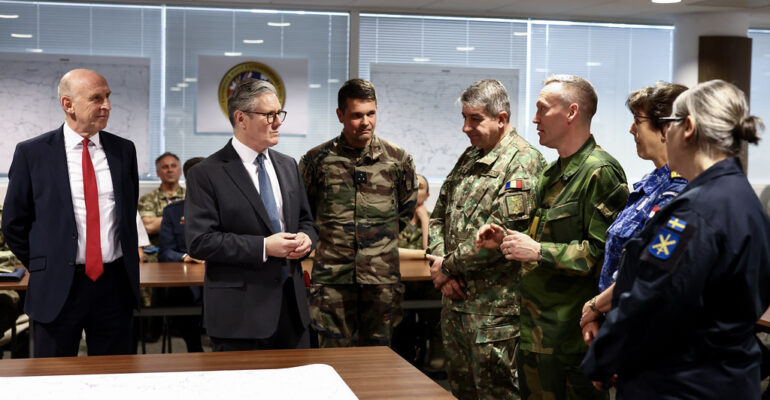
The British political landscape has been thrown into complete turmoil. In a dramatic development that threatens to dismantle the core stability of Downing Street, Defence Secretary John Healey has officially resigned. The John Healey resignation has blown a massive hole in the credibility of Prime Minister Keir Starmer’s administration, exposing deep, structural fractures over how the United Kingdom intends to fund its national security at a time of unprecedented global volatility.
For months, behind-the-scenes tensions had been mounting between the Ministry of Defence (MoD) and the Treasury. However, the crisis boiled over into a full-scale public fallout when Healey posted a blistering, unreserved resignation letter on social media. In his departure note, Healey did not mince words, directly accusing the Prime Minister of failing to show the necessary authority and pointing to a Treasury completely unwilling to finance the protection of the realm.
This extensive analysis deconstructs the core reasons behind the John Healey resignation, the policy failures surrounding the long-delayed Defence Investment Plan (DIP), the expanding global military threats facing the nation, and what this explosive exit means for the future of UK governance.
1. Why Did He Quit? The Inside Story of the John Healey Resignation
At the absolute heart of the John Healey resignation is a fierce, multi-billion-pound budgetary war that pits military necessity against fiscal austerity. Healey’s exit is a clear, unapologetic protest against a financial settlement that he firmly believes compromises the safety of British armed forces and the wider nation.
“Unable” Prime Minister and an “Unwilling” Treasury
In what political commentators are calling one of the most damaging resignation letters in modern political history, Healey leveled a devastating dual critique at the top of the UK government. He explicitly stated that Prime Minister Keir Starmer has been “unable,” and Chancellor Rachel Reeves’s Treasury has been “unwilling,” to provide the vital resources required to match rising international threats.
The friction reached a breaking point on Monday afternoon when Healey was finally handed the complete, finalized financial figures for the government’s multiyear blueprint. Realizing that the proposed funding model fell drastically short of what was required, Healey concluded he could not in good conscience defend the strategy.
Healey wrote:
“Without a DIP that meets the moment in this way, I am being forced to make decisions that would reduce the readiness of our Forces and increase the risk to personnel on operations, and could make the country less safe. I am now left with no other option than to submit my resignation as your Defence Secretary.”
The 3% GDP Clash and the “Backloaded” Budget Debate
The definitive policy dividing line that triggered the John Healey resignation comes down to rigid percentages of Gross Domestic Product (GDP). While the Prime Minister has frequently paid lip service to an ultimate, long-term target of spending 3.5% of GDP on defense by 2035, Healey argued that the immediate timeline was a mathematical illusion.
- The Healey Demand: The former Defence Secretary, backed firmly by military top brass and the cross-party Parliamentary Defence Committee, insisted on a firm, binding commitment to hit 3% of GDP on defense by 2030.
- The Starmer Settlement: The Treasury’s approved funding package instead backloads the investment, bringing defense spending to a mere 2.68% of GDP by 2030. Given that spending is already projected to hit 2.6% next year, Healey accurately exposed that the government was planning a microscopic increase of just 0.08 of a percentage point over the latter half of the decade—a sum he deemed completely trivial given the global climate.
                PROJECTED UK DEFENSE SPENDING BY 2030
   ┌─────────────────────────────────────────────────────────────┐
   │ John Healey / Defence Committee Target:       3.00% of GDP  │
   ├───────────────────────────────────────────────┬─────────────┤
   │ Starmer / Treasury Approved Settlement:       │ 2.68% of GDP│
   ├───────────────────────────────────────────────┴─────────────┤
   │ Current Expected Baseline (Next Year):        2.60% of GDP  │
   └─────────────────────────────────────────────────────────────┘
2. What is the DIP? The Failed Defense Investment Plan and Industrial Chaos
You cannot fully grasp the structural impact of the John Healey resignation without evaluating the catastrophic delays plaguing the UK’s Defence Investment Plan (DIP). Intended to serve as the definitive, multiyear roadmap for military procurement and modernization, the DIP has instead become a symbol of Whitehall paralysis.

A National Disgrace: Paralyzing British Industry
The ongoing delays and severe underfunding of the DIP have drawn furious condemnation from both trade unions and industrial leaders. Major defense trade groups have noted that the lack of planning certainty leaves the UK’s sovereign manufacturing base in an incredibly fragile position.
Unite the Union, which represents thousands of aerospace and shipyard personnel, explicitly warned that the John Healey resignation shines a harsh spotlight on an industrial bottleneck that is actively risking skilled, well-paid British jobs. The government has reportedly tried to balance the books by raiding departmental capital programs, attempting to rob Peter to pay Paul rather than adjusting strict fiscal borrowing rules to allow for deep infrastructure investment.
Crucial Security Projects Left Hanging in the Balance
Because the Treasury capped the new money for the DIP significantly below what the MoD requested—offering roughly £13.5 billion instead of the demanded £18 billion—a massive array of critical, front-line sovereign manufacturing contracts are now completely stalled. The delayed sign-offs have left several vital national security programs hanging in limbo:
- The Typhoon Fast Jets: Next-generation production lines and upgrades designed to maintain air superiority.
- The Skynet Satellite Program: The UK’s secure, sovereign military space communications network.
- Project Euston: The essential, specialized dry docks facility required to maintain and service Britain’s nuclear submarine fleet.
- The A400M Transport Planes: Heavy-lift tactical transport aircraft critical for rapid global military deployment.
3. A More Dangerous World: Rising Geopolitical Threats vs. Budget Cuts
What makes the timing of the John Healey resignation so terrifying to defense experts is the sheer scale of international military operations the UK has recently committed to lead. In his letter, Healey pointedly used Keir Starmer’s own rhetoric against him, reminding the Prime Minister of a stark intelligence warning issued just last week: that the UK and its allies could face a direct Russian attack on a NATO member state as early as 2030.
Expanding Global Military Commitments
Despite a severely constrained budget, the Starmer government has aggressively expanded the Royal Navy and Royal Air Force’s operational burdens across multiple global theaters:
- The Strait of Hormuz Mission: The UK has stepped up to lead a complex, highly volatile multinational military mission to protect maritime shipping lanes amid active conflict with Iran.
- NATO’s Arctic Sentry: Britain has accepted a core leadership role in the High North to counter aggressive Russian naval movements and protect critical subsea infrastructure.
- Post-Ceasefire Ukraine Commitments: The administration has actively positioned the UK to take a front-and-center role in leading multinational stabilization forces in Ukraine the moment any potential ceasefire materializes.
Healey’s core argument is simple: the government cannot expect to play a leading role on the global stage while simultaneously underfunding the very men, women, and machinery required to execute those high-stakes operations.
| Operational Front | Strategic Purpose | Current Military Burden | Funding Status Under Current DIP |
| Strait of Hormuz | Countering Iranian maritime threats; securing global shipping lanes | High; UK leading multinational task force | Severely underfunded; relies on overextended naval assets |
| Arctic Sentry (NATO) | Deterring Russian submarine and naval activity in the High North | Expanding; continuous deployment requirements | Capital cuts threaten long-term fleet modernization |
| UK Defense Industrial Base | Manufacturing Typhoon jets, Skynet satellites, and submarine dry docks | Stalled; contracts un-signed due to budget delays | Shortfall of billions compared to initial costings |
4. The Political Fallout: A Fragile Premiership Facing a Leadership Challenge
Beyond the immediate crisis inside the Ministry of Defence, the John Healey resignation has triggered a catastrophic political emergency inside the Labour Party. Coming a mere two years after a historic landslide general election victory, Starmer’s authority is visibly draining away at an alarming pace.
A Cascade of Ministerial Defections
Healey is not an isolated defector; he is the sixth minister to resign from the government in the space of just one month. High-profile figures, including former Health Secretary Wes Streeting, have already exited the cabinet, openly criticizing the administration’s distinct lack of a unifying vision and clear strategic drift.
The timing is uniquely toxic for No. 10. Rumors are swirling across Westminster that disgruntled Labour MPs are actively war-gaming a formal leadership challenge. All eyes are locked onto next Thursday’s critical Makerfield by-election. If Greater Manchester Mayor Andy Burnham or alternative figures capitalize on the growing discontent, Starmer could face a sudden vote of no confidence from within his own backbenches.
Political opponents have seized on the chaos, with Conservative Leader Kemi Badenoch releasing a sharp public statement:
“John Healey, the former defense secretary, has acted honourably by resigning. Keir Starmer is too weak to cut welfare and fund defence.”
Conclusion: A Grave Turning Point for British National Security
Ultimately, the John Healey resignation will be remembered as a definitive turning point for modern British defense policy. By choosing to walk away from one of the highest offices in the land, Healey has successfully stripped away the political spin surrounding the UK’s military readiness. The Parliamentary Defence Committee has rightly labeled this a “grave moment” that the government must address with the utmost seriousness. As international conflicts intensify and the UK’s strategic commitments multiply, the next Defence Secretary inherits an incredibly dangerous paradox: a nation attempting to project superpower influence on a heavily compromised, backloaded budget.